About Us

A family brand, now in its third generation.

Founded in South Africa in the early 2000s, handed down twice since, and brought to the United States in 2025. We are not a distillery — we own the recipe and the standard, and we work with producers good enough to hold it.

The Family

Passed down, not sold on.

Celtic Bay started in South Africa in the early 2000s as a family business, and it has stayed one. The recipe, the base and the standard it is held to came from the generation that started it; two generations later the people making the decisions are still the family.

That continuity is the whole point. There has never been an outside owner asking for a cheaper base, a faster cut or a line extension to fill shelf space. When something about Celtic Bay has changed, it changed because someone in the family could taste the difference.

In 2025 the third generation carried that recipe to the United States, which is the biggest step any of them has taken. What is in the bottle has not moved an inch.

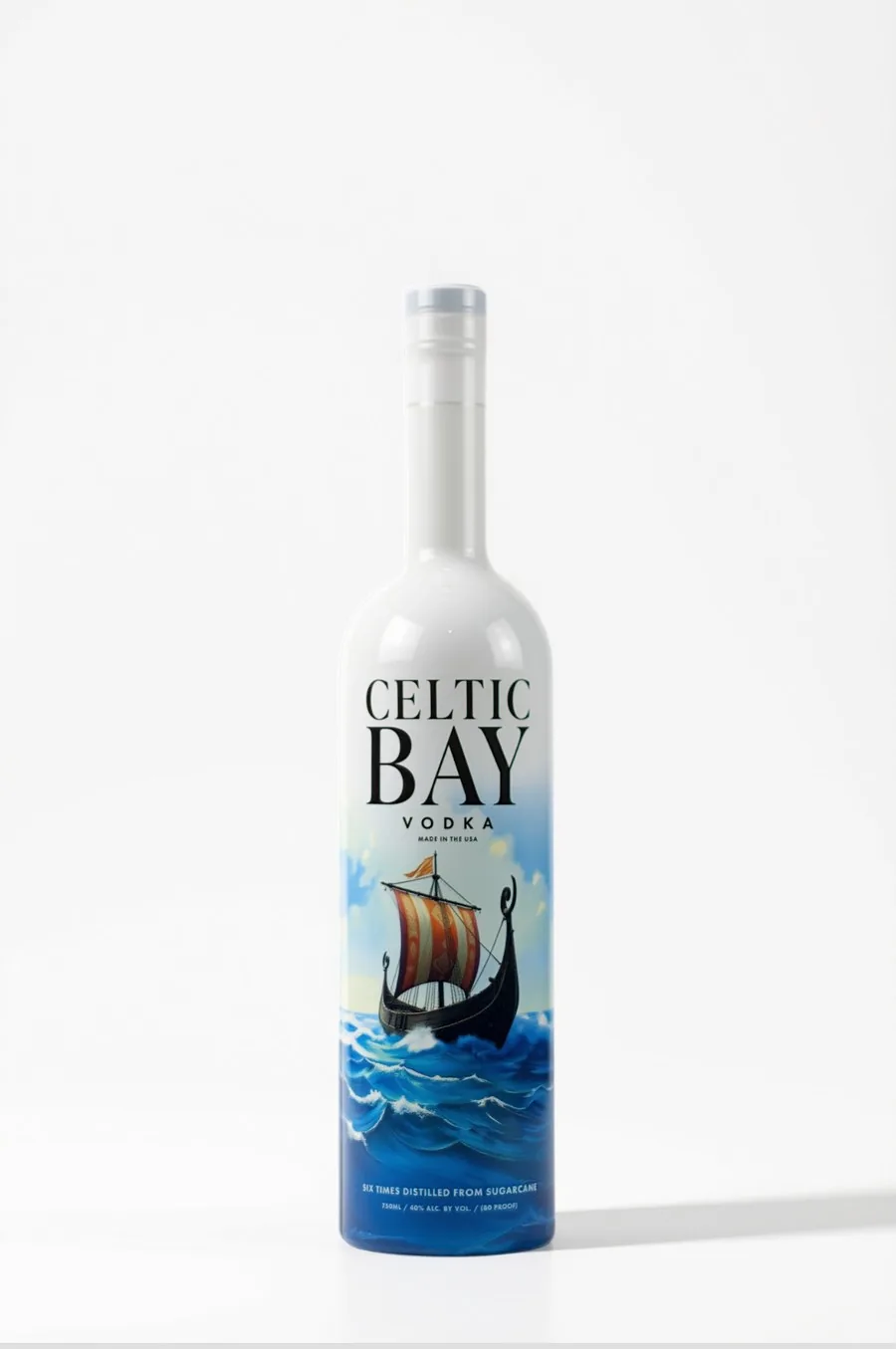
A 750ml bottle of Celtic Bay Vodka photographed against a pale studio background, showing the sailing ship artwork

750ml · 40% ALC/VOL

Why Sugarcane

We chose cane partly for how it grows.

Most vodka is made from wheat, corn or rye. We use sugarcane, and taste is only half the reason. The other half is what it takes to get a litre of spirit out of each crop — and on that measure, cane starts a long way ahead.

The crop

Perennial, not annual

Cane is a grass. Cut it and it grows back from the same root stock for several harvests before it needs replanting. Wheat and other grains are sown, harvested and ploughed back in every single year, with the soil disturbance and field work that goes with it.

The yield

More spirit per acre

Cane converts sunlight into fermentable sugar more efficiently than cereal crops do, and yields considerably more of it per acre. Less land stands behind every bottle, which is the part of a footprint that is hardest to offset later.

The process

One less step, and it fuels itself

Grain has to be milled and cooked so enzymes can turn its starch into sugar before fermentation can even begin. Cane arrives fermentable, so that heat- and water-hungry stage disappears entirely. The crushed fibre left over — bagasse — is burned to run the mill, so cane processing largely powers itself.

What We Hold To

Four things we will not compromise on.

One

One product, done properly

No line extensions for the sake of shelf space. One vodka, one specification, consistent from batch to batch.

Two

Nothing added

Sugarcane, water and six distillations. No sweeteners and no additives to round off a cut that should have been made properly in the first place.

Three

One recipe, two countries

Produced and bottled in South Florida since 2025, from the specification the family wrote in South Africa. The address on the label changed. Nothing inside the bottle did.

Four

Drink better, not more

We market to adults of legal drinking age, and we would rather someone drank one good measure than three forgettable ones.

Three generations have had the chance to cut a corner here. None of them took it. Celtic Bay Vodka · Family owned since day one

The Move

From South Africa to the United States

Expanding into the US in 2025 is the third generation’s contribution, and it was not a decision taken lightly. A family brand travels badly if the thing that made it worth carrying gets left behind at the border.

So the specification came with it, unchanged: the same sugarcane base, the same six distillations, the same 80 proof. We found South Florida producers who could meet it and would let us audit that they had. The market is new. The vodka is not.

Work With Us

Distributors, retailers and bars.

Celtic Bay is sold in the United States only. We are appointing distributors, retailers and on-trade partners state by state, and would like to hear from you.